


Transforming Medicine from Qualitative to Quantitative: How FMTVDM® Is Changing the Health-Spectrum
Updated: Oct 25, 2025
Introduction
For almost a century medicine has relied on qualitative or semi-quantitative imaging — descriptions such as “looks abnormal,” “possible inflammation,” or “may represent disease.”
But what if we could go further — to quantitatively measure tissue health, vascular flow, and metabolism in real time, before irreversible damage occurs?
That paradigm shift is exactly what the Fleming Method for Tissue & Vascular Differentiation and Metabolism (FMTVDM®) delivers.
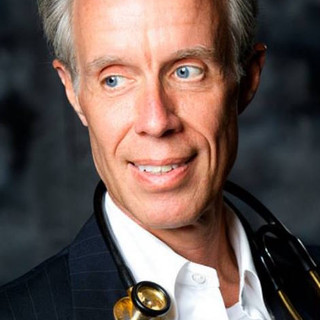
Dr. Richard M. Fleming, who earned his PhD in Physics, holds U.S. Patent No. 9,566,037 B2 for the FMTVDM® methodology. His work confirmed that only a single isotope dose is required for multiple imaging studies — a position verified by independent research and documented on his official sites.
From “Looks Abnormal” to “We Measure”
Traditional imaging often stops at “is there something wrong?”
FMTVDM® begins where others end — by calibrating imaging equipment, enhancing measurable differences in blood flow and metabolism, and quantifying what actually changes.
Through proprietary equations and physics-based modeling, FMTVDM® measures the Health-Spectrum of tissue function — providing clinicians with reproducible data instead of subjective impressions.
Learn more:
Why the Health-Spectrum Matters
Illness doesn’t appear overnight — it evolves across measurable states.
FMTVDM® allows clinicians to detect these transitional phases long before disease becomes irreversible.
For instance, in breast tissue imaging, FMTVDM®-BEST identifies early metabolic shifts that occur as benign tissue progresses toward malignancy — well before mammography or biopsy might show it.
This Health-Spectrum model enables:
Early disease detection
Measurable tracking of treatment response
Reduced unnecessary procedures
Personalized treatment decisions
Dr. Fleming emphasizes:
“Medicine must evolve from a disease model to a health model. We must measure health changes — not just wait for disease to appear.”
Applications Across Medicine
1. Cardiology
FMTVDM® quantifies coronary blood flow and regional metabolism, identifying ischemia that standard angiograms may miss.
2. Oncology
The FMTVDM®-BEST pathway measures tissue changes regardless of breast density, implants, or sex — improving accuracy and reducing false results.
3. Infection & Inflammation
Dr. Fleming’s discovery of the Inflammatory Thrombotic Immune Response (ITIRD) links measurable tissue changes with infection, coagulation, and immune activity — including those seen in SARS-CoV-2.
4. Treatment Monitoring
Because FMTVDM® provides objective numerical endpoints, it’s uniquely suited for monitoring how a therapy is working — in clinical care or research.
A Global Opportunity: Select Nation Status (SNS)
FMTVDM® is now being introduced through Select Nation Status (SNS) programs, helping countries modernize imaging, training, and diagnostic reproducibility.
Nations licensing and adopting FMTVDM® benefit from:
Reduced imaging costs
Enhanced diagnostic accuracy
Standardized measurable health data
Advancement toward true precision medicine
Key Takeaways
✅ Calibrate first – Reliable measurement begins with “quantitatively” calibrated imaging systems.
✅ Quantify change – Measure real differences in flow and metabolism, not just appearance.
✅ Track the continuum – Map health over time instead of labeling “disease or not.”
✅ Adopt measurable endpoints – For research, regulation, and clinical care.
✅ Shift to the health-model – Prevention and precision depend on measurement.
Conclusion
The transition from qualitative to quantitative medicine marks the next era in healthcare.
With FMTVDM®, Dr. Richard M. Fleming merges physics, medicine, and ethics — proving that calibration → enhancement → quantification → measurement is the path to precision, accountability, and better outcomes.
As healthcare systems face rising costs, aging populations, and complex diseases, the ability to measure health — not just guess — will define the future of medicine.
Contact & Collaboration
For collaboration, licensing, or presentation requests, contact:
Join the movement to make medicine measurable — because only measurement changes outcomes.


Comments