


From Imaging to Intelligence: How FMTVDM® Turns Data Into Diagnosis
- Richard M Fleming, PhD, MD, JD
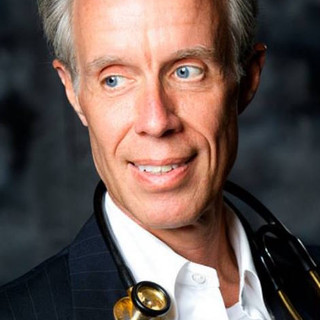
- Oct 24, 2025
- 3 min read
Updated: Oct 25, 2025
Introduction: The Leap from Seeing to Knowing
For decades, medical imaging has been treated as an art — a matter of interpretation. But interpretation is not measurement. When physicians rely on qualitative visual assessments, diagnostic results vary from one reader to the next, from one machine to another, and from one country to the next.
FMTVDM® (Fleming Method for Tissue and Vascular Differentiation and Metabolism) transforms this uncertainty into quantifiable science. By calibrating imaging systems and converting data into measurable, reproducible values, FMTVDM® provides the missing link between medical imaging and artificial intelligence (AI); but not just any artificial intelligence, A.I.2 (actual and artificial intelligence) - resulting in reliable quantitative data.
Why A.I.2 Needs Calibrated, Quantitative Data
A.I.2 promises to revolutionize medicine — but only if it learns from accurate information. The problem? Most imaging data are uncalibrated, meaning they are visually descriptive but not quantitatively standardized.
Without calibration, two identical patients can appear “different” to a standard AI model simply because of machine or acquisition variability. This undermines diagnostic consistency and prevents meaningful comparison across studies or populations.
FMTVDM® solves this by establishing an A.I.2 scientifically reproducible calibration curve, ensuring every camera produces standardized quantitative data, regardless of geography or manufacturer.
Once calibrated, A.I.2 can finally learn from real, measurable physiology — not image brightness or subjective texture — enabling accurate diagnostic predictions.
Turning Images into Measurable Physiology and Measured Physiology into Anatomical Information.
FMTVDM® applies physics, biology, and mathematics to quantify the continuum of tissue health.
Instead of a simple “normal vs. abnormal” image equivalent to turning a light switch on or off, FMTVDM® measures like a rheostate how healthy or diseased tissue is. This is achieved by:
Calibrating the imaging system using a known reference.
Quantifying isotopic uptake to reflect true perfusion and metabolism.
Generating a numerical measurement that correlates directly to tissue viability, metabolic function and blood flow.
Published studies demonstrate this principle across disease states.
For example:
Fleming RM. Measuring Regional Blood Flow and Metabolism: FMTVDM Quantitative Imaging. J Nucl Cardiol. 2018;25(3):1–9.
Fleming RM. FMTVDM: Quantifying Inflammation and Cancer Using the Fleming Method. J Nucl Med Radiat Ther. 2017;8(3):1–8.
These works show that FMTVDM® doesn’t just display disease — it measures it.
The Fleming Method Introduces Artificial Intelligence 2 (A.I.2)
Artificial intelligence systems require structured, quantitative data to learn, validate, and predict. FMTVDM® provides exactly that. However, unlike conventional A.I., A.I.2 combines actual (human) intelligence with artificial (machine driven) intelligence. https://www.fmtvdm.com/post/ai-symbol-a-dual-intelligence-mandate
Through calibration and quantification, FMTVDM® transforms the subjective “image” into an objective dataset. A.I.2 can then analyze these reproducible numerical patterns, matching them with clinical outcomes — a step impossible with qualitative (pretty pictures) imaging.
The result is a convergence of human expertise and machine precision:
A.I.2 learns from calibrated, quantified data
Physicians gain measurable diagnostics
Healthcare achieves reproducible results
This positions FMTVDM® as the foundation technology for the next generation of intelligent diagnostics — merging physics-based accuracy with A.I.2-driven insight.
Reproducibility: The Global Standard for Diagnostic Truth
At the heart of scientific progress lies reproducibility.
FMTVDM®’s patented process (U.S. Patent 9,566,037 B2) ensures that each calibrated camera “speaks the same language.” This means that results obtained in Tokyo, Houston, or Bratislava can be directly compared — establishing the world’s first standardized diagnostic scale for tissue health.
The implications are global:
Consistent medical research results
Reliable multi-center clinical trials
Uniform diagnostic standards across nations
In short: FMTVDM® provides the quantitative framework that both medicine and AI have been waiting for.
The Future of Measurable Medicine
Medicine stands at a crossroads. One path continues the century-old reliance on images and impressions; the other, led by FMTVDM®, establishes a foundation for measurable, reproducible, intelligent diagnostics.
Dr. Richard M. Fleming’s fusion of physics, medicine, and mathematics has created a methodology that not only advances clinical imaging but also provides the essential data structure A.I.2 requires.
FMTVDM® is more than a method — it’s a revolution in how we define, measure, and understand health itself.
Key Takeaways
✅ A.I.2 depends on calibrated, quantitative imaging data.
✅ FMTVDM® converts images into measurable physiologic and anatomical values.
✅ Calibrated imaging produces global reproducibility.
✅ Quantitative data unite medicine, research, and A.I.2.
✅ FMTVDM® provides the scientific bridge between human interpretation and artificial intelligence.
References
Fleming RM. Measuring Regional Blood Flow and Metabolism: FMTVDM Quantitative Imaging. J Nucl Cardiol. 2018;25(3):1–9.
Fleming RM. FMTVDM Quantitative Measurement of Tissue Health and Disease. J Nucl Med Radiat Ther. 2017;8(3):1–8.
Fleming RM. U.S. Patent No. 9,566,037 B2 — Method for Measuring Differences in Tissue and Vascular Activity.
Contact & Collaboration


Comments